
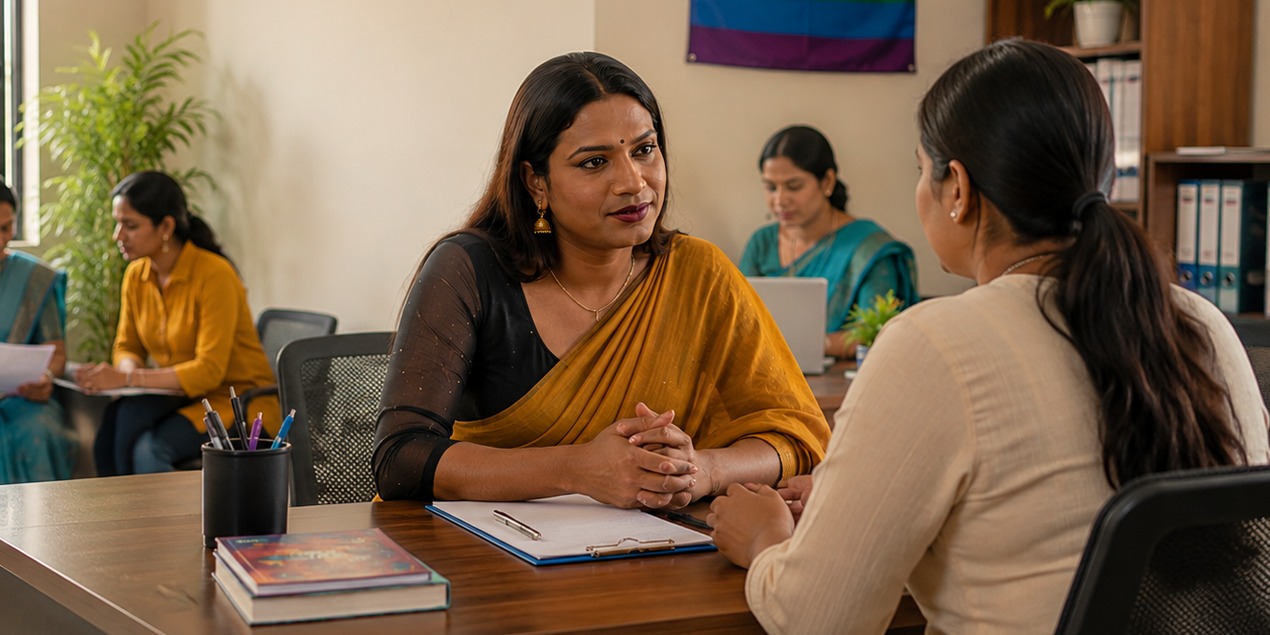
Beyond Recognition: The Need for Dignity, Inclusion, and Equal Opportunity
The idea of human rights is built on a simple principle: every individual deserves dignity, equality, and freedom. On paper, these rights belong to everyone, regardless of gender identity. Yet, for India's transgender community, legal recognition has not translated into equal lived experiences.
Despite constitutional protections and progressive judicial decisions, many transgender persons continue to face discrimination in education, employment, healthcare, housing, and public life. The gap between rights guaranteed by law and rights experienced in everyday life raises an important question:
Are human rights alone enough?
The Legal Progress India Has Made
India has taken significant steps toward recognising transgender rights over the past decade.
The landmark NALSA v. Union of India (2014) judgment by the Supreme Court recognised transgender persons as the "third gender" and affirmed that gender identity is an integral part of an individual's dignity and personal liberty. The Court directed governments to provide reservations in education and employment, improve healthcare access, and implement welfare measures.
In 2019, the Transgender Persons (Protection of Rights) Act prohibited discrimination in education, employment, healthcare, housing, public services, and access to government benefits. It also established mechanisms for obtaining a transgender identity certificate and laid down penalties for certain discriminatory acts.
These developments were important milestones. However, legislation alone cannot eliminate deep-rooted social prejudice.
The Reality Behind the Rights
For many transgender individuals, discrimination begins at home. Family rejection often leads to school dropouts, homelessness, and financial instability at an early age. Without educational opportunities or employment, many are pushed into informal occupations such as begging or sex work, not by choice, but due to limited alternatives.
Healthcare also remains a major challenge. Although policies acknowledge the healthcare needs of transgender persons, access to gender-affirming care, mental health services, and trained medical professionals remains inconsistent across India. Fear of discrimination often discourages people from seeking medical treatment altogether.
Employment discrimination is another persistent concern. Many qualified transgender candidates struggle to secure jobs because of bias during recruitment or at the workplace. Even when legal protections exist, enforcement mechanisms are often weak.
Access to housing, banking services, identity documentation, and public spaces also continues to present barriers, particularly when official records do not accurately reflect an individual's gender identity.
Why Human Rights Alone Are Not Enough
Human rights create the legal framework for equality, but they do not automatically change attitudes, institutions, or opportunities. A transgender person may legally have the right to education, but if schools are unsafe or unwelcoming, that right becomes difficult to exercise.
They may have the right to employment, but hiring discrimination can still prevent meaningful participation in the workforce. They may have the right to healthcare, but inadequate medical infrastructure and lack of awareness among professionals can leave those rights largely inaccessible.
In other words, legal equality does not always produce social equality. True inclusion requires transforming systems, not merely recognising rights.
Building a More Inclusive India
Improving the lives of transgender persons requires coordinated efforts from governments, educational institutions, employers, healthcare providers, and society as a whole.
Some key priorities include:
- Inclusive education through anti-bullying policies, gender-sensitive curricula, and teacher training.
- Employment opportunities supported by inclusive hiring practices, workplace diversity policies, and skill development programmes.
- Accessible healthcare with trained professionals, affordable gender-affirming care, mental health support, and respectful treatment.
- Simplified legal processes for updating identity documents without unnecessary administrative barriers.
- Social awareness campaigns that reduce stigma and promote understanding of gender diversity.
- Effective implementation of welfare schemes through better coordination between central and state governments.
- Meaningful participation of transgender communities in policy-making, ensuring that solutions are shaped by lived experiences rather than assumptions.
The Role of Society
Legal reform is only one part of the solution. Everyday actions also matter.
Using respectful language, recognising an individual's chosen name and pronouns, creating inclusive workplaces, supporting transgender-owned businesses, and challenging discriminatory behaviour all contribute to building a society where dignity is experienced; not merely promised.
Inclusion is not about special treatment. It is about ensuring that every individual has an equal opportunity to participate in education, employment, healthcare, and public life without fear of discrimination.
Conclusion
India has made notable progress in recognising the rights of transgender persons, but recognition alone is not enough. Human rights establish the foundation, yet true equality requires implementation, accountability, and social acceptance.
The goal should not simply be to protect transgender individuals from discrimination, but to create an environment where they can live with dignity, security, and equal opportunity.
A society becomes stronger not when it merely grants rights on paper, but when every individual can exercise those rights without barriers. For India's transgender community, the journey toward equality continues; and it requires commitment from both institutions and society alike.